Tuesday, 14 September 2021

Anonymous Claims to Have Stolen Huge Trove of Data From Epik, the Right-Wing’s Favorite Web Host


Members of the hacktivist collective Anonymous claim to have hacked web registration company Epik, allegedly stealing “a decade’s worth of data,” including reams of information about its clients and their domains.

Epik is controversial, having been known to host a variety of rightwing clients, including ones that previous web hosting providers, like GoDaddy, have dropped for various reasons. Its users have included conservative social media networks Parler and Gab, as well as conspiracy-theory-laden YouTube wannabe Bitchute and former President Trump fansite, The Donald. The company recently hosted prolifewhistleblower.com—the website designed to help people snitch on Texas residents who want abortions—but later forcibly removed the tip-collecting platform after determining that it had violated Epik’s terms by nonconsensually collecting third-party information.

Now, however, the apparent hacking of its platform means that all of Epik’s clients may soon have their backend information offered up to public scrutiny.


News of the apparent incident was first reported by Steven Monacelli, an independent journalist from Texas, who tweeted Monday that a “large dataset” belonging to the company appeared to have been stolen. Monacelli’s information comes from a 4Chan “press release” put out by the alleged hackers. In the release, the group claims to have stolen domain purchases and transfers, account credentials for “all Epik customers,” as well as a data dump from an Epik employee’s email inbox, among many other items.

“This dataset is all that’s needed to trace actual ownership and management of the fascist side of the Internet that has eluded researchers, activists, and, well, just about everybody,” the release claims.

When reached for comment, Epik told Gizmodo that they weren’t aware of a hacking incident. “We are not aware of any breach. We take the security of our clients’ data extremely seriously, and we are investigating the allegation,” said a spokesperson, in an email.

Whether Epik is aware of the breach or not, their alleged data is now in the hands of online activists who plan to publish it on the web. The hacktivist group Distributed Denial of Secrets said Tuesday that a source had provided them with the leak and that they plan to curate it for public consumption on their website. DDoS, which has made a habit of releasing data from many of the clients of Epik, affirmed that the data haul includes extensive registration information about users of the company. The DDoS site claims the dump includes “180 gigabytes of user, registration, forwarding and other information behind the ‘privacy’ web hosting and registrar service Epik, known for hosting fascist, white supremacist and other right-wing content as well as harassment and doxing websites.”

Links to the data dump are widely available online but Gizmodo does not recommend the average user going around downloading unvetted hacked materials.

In the past, Epik has acted as a refuge to right-wing groups that have been kicked off of other hosting platforms. Case in point, it took in Parler and Gab, the MAGA-styled Twitter clones that had trouble finding a home after much of the organizing around the January 6th attack on the Capitol building was found to have originated on their virtually unmoderated platforms. However, the company recently made it known that it does draw the line somewhere when it cut ties with the abortion snitch site.

DDoS has previously hosted data that was stolen in confirmed hacking and/or scraping incidents, including ones involving Gab, Parler, and the Metropolitan Police Department in Washington D.C. The group was punished by Twitter last year after the secrets-publisher shared a link to more than 200 gigabytes’ worth of stolen police data, including thousands of confidential emails, FBI bulletins and memos dated as far back as 1996. Twitter suspended the DDoS citing violations of its “hacked materials policy,” which would undergo a radical rewrite only a few months later.

Gizmodo has downloaded copies of the Epik data and will be assessing its content.

Going after social commerce for sportspeople, Millions gets $10M


Matt and Adrian (co-founders) ring shot MILLIONS.CO

Millions.co, a social commerce platform geared toward professional and semi-professional athletes wanting help to monetize their fanbase by selling merch and/or on-demand video, has grabbed $10 million in funding led by Boston-based Volition Capital.

The round is being loosely pegged as a Series A as the seasoned team behind Millions self-funded the first wave of development to get the platform launched.

The founding team includes CEO Matt Whitteker, a boxing gym owner who co-founded the supply chain data management unicorn Assent Compliance and NoNotes.com; CMO Brandon Austin, co-founder of Go-Fish Cam; and, in advisor roles, Adrian Salamunovic, co-founder of DNA 11 and CanvasPop; Scott Whitteker (Fight for the Cure) and Bruce Buffer (a veteran sports announcer).

Millions launched its fan engagement social commerce platform in April — with an initial three products for pro/semi-pro athletes to pitch at their followers: Namely custom merchandize (including a free design service); ask-me-anything personalized videos; and a pay-per-view streaming offering that lets fans pay to tune into a livestream of their favorite sportsperson.

The startup’s initial plan had been to build just an e-commerce and merchandising platform but, having built that component, Salamunovic says the team decided to bundle in video products — such as personalized videos and “democratising” pay-per-view (PPV). 

“Our biggest advantage and differentiator is that we are strictly focused on the sports world and fan engagement,” he tells TechCrunch. “The obvious indirect competitors are Twitch (heavily focused on e-sports/gaming), Patreon (focused on creators), Represent.com (focused on merch drops for ‘influencers’), and even OnlyFans (we know who they focus on) but we’re laser-focused on the multibillion-dollar sports market.”

“Cameo has a very similar product to our video ‘Ask Me Anything’ platform — but we don’t focus on birthday shout-outs we focus on allowing fans to ask their favorite athletes questions around their training, their success, predictions (we’ve seen a lot of gamblers use our platform to get tips) and less on things like shout-outs,” he adds. “We love Cameo, but we’re really different and focused on sports.”

“Instagram, TikTok, Snapchat, Facebook are all great social media platforms that allow athletes to engage and interact with their fans but it’s not a great place to monetize your audience,” Salamunovic also argues. “We help athletes create a brand, build a merch line, sell video content (personalized videos and watch parties all on a single platform). We’re not trying to replace any of these platforms, we’re complementing them by allowing the athletes to provide a single link and landing page for deeper interaction and monetization. The fans seem to love it too.”

At this stage, Millions only has around 300 athlete profiles live but says it has “thousands” who’ve registered interest across a variety of sports categories.

Its first focus — including for partnerships with agencies and sports leagues — has been on “combat sports and gyms”. But the platform has a long list of sports types in the search filter — from lacrosse to water polo to baseball or gymnastics — so the ambition is to go after a very broad funnel of pro/semi sportspeople. 

And for every Michael Jordan or Cristiano Ronaldo — aka, those top-tier athletes who can command hundreds of millions in sponsorship fees by inking partnerships with top brands to promote their products and who you certainly won’t find selling hats on Millions — there are scores of athletes who aren’t able to cut such sweet deals and who will have far more modest fanbases.

It’s that broad field of players and performers who Millions hopes will flock to its platform — and take up its dedicated offer of social commerce tools and tech to engage with and monetize their followers.

Commenting on the funding in a statement, Sean Cantwell, managing partner at Volition Capital, suggested: “Athletes are always looking for ways to connect on a deeper level with fans, generate additional revenue streams and build their personal brands and Millions offers all of this on a single platform. We think that Millions is the future of fan engagement.”

To help grease the funnel of sportspeople it needs to drive eyeballs to its platform, Millions is offering athletes a “signing bonus” when they join and start selling — with a variety of tiers of bonus (of up to $5K) per sportsperson.

We initially wanted to stay hyper-focused on combat sports and not try to ‘boil the ocean’. Now we’re releasing new athletes’ profiles daily and introducing new sports like football, volleyball, golf and more,” notes Salamunovic. “Really, this platform is designed for any athlete who wants to reach their fans and create new monetization channels without having to put a ton of effort into things like page design, technology, design or logistics… we take care of all that so they can focus on engaging with their fans and most importantly on their sport and training.” 

“We’re looking to build the most important sports tech company in history,” he adds. “We’re going to be the Etsy ($21 billion market cap) of sports. That’s an ambitious statement but it’s true; 98% of athletes NEED our product/platform.”

Chasing that scale is why Millions is raising now. And while the early focus has been on North America — where about 90% of the onboarded sportspeople hail from currently — it reckons there’s “huge growth potential” in Europe and Asia so is very much gunning to build a global business.

It says it’ll be splashing Series A cash on growing its product engineering team and recruiting to expand its team generally, as well as spending on marketing to get the word out to athletes and get more signed up to build their own brands and sell direct to fans. 

“I believe a powerful thing we’re doing, past just the product offering, is enabling athletes to have a team,” adds Austin. “With Millions, athletes get a marketing team, a personal account manager, and a design team that they can use to build their brand and product line, and to promote to, and further build, their fan base. We allow the athlete to focus on training, playing/fighting, and winning while we help take care of everything else, and coach them on how to brand and market themselves.” 

Millions’ business model is to take a 20% cut of all sales athletes make via the platform — with the split remaining the same for merchandise or video sales.

For the former, Millions is using a global network of print-on-demand suppliers to do the fulfilment.

While products the platform can customize for athletes to sell as their own brand merch include t-shirts, caps and hoodies.

Rivian’s first production R1T electric pickup truck rolls off the line


Rivian’s first production R1T electric pickup truck rolls off the line


The first Prduction Rivian R1T electric pickup truck in “Rivian blue” rolled off the assembly line Tuesday morning at the company’s factory in Normal, Illinois, marking a milestone more than a decade in the making for the automaker and its founder and CEO, RJ Scaringe.

The company, which started in 2009 as Mainstream Motors before adopting the Rivian name two years later, has undergone explosive growth in terms of people, backers and partners in the past few years. Today, Scaringe tweeted the news and a photo of the first production truck painted in Rivian Blue.

“After months of building pre-production vehicles, this morning our first customer vehicle drove off our production line in Normal,!” he wrote. “Our team’s collective efforts have made this moment possible. Can’t wait to get these into the hands of our customers!”

What isn’t clear is who will get this first customer vehicle.

Rivian operated in relative obscurity, aka stealth mode, for years before it revealed prototypes of its all-electric R1T truck and R1S SUV at the LA Auto Show in late 2018.

Since then, Rivian has raised billions of dollars ($10.5 billion since 2019); expanded its Normal, Illinois, factory; hired thousands of employees; landed Amazon as a commercial customer; and, most recently, filed confidentially for an IPO. Today, in addition to its Illinois factory, Rivian has facilities in Palo Alto and Irvine, California; and Plymouth, Michigan; and an office in the U.K.

When it first revealed the two electric vehicles in 2018, Rivian had about 600 employees. Today, it has 8,000.

Scaringe’s announcement Tuesday, which marks the official beginning of R1T production for customers, comes after at least two delays caused by the COVID-19 pandemic and global chip shortage. Earlier this summer, Scaringe wrote in a letter to customers that R1T deliveries would begin in September, with the R1S to follow “shortly.”

Rivian has been juggling the dueling priorities of prepping and eventually producing the R1T and R1S for consumers and commercial delivery vans for Amazon. The Illinois factory has two separate production lines producing vehicles. One is dedicated to the R1 vehicles and the other line is for its commercial vans.

Amazon ordered 100,000 of these vans, with deliveries starting in 2021. Earlier this year, Amazon began testing the electric delivery van in several cities, including Los Angeles and San Francisco.

Earlier this month, Rivian announced that the first edition version of the R1T pickup truck has an official EPA range of 314 miles, while its R1T SUV comes in at 316 miles.

The official range and fuel economy values posted on the U.S. Environmental Protection Agency website align with Rivian’s previous estimates, which it advertised as 300 miles.

The moment is also important because it means Rivian has the benefit of being the first electric truck on the market. Ford’s F-150 Lightning, which isn’t expected to come on the market until spring 2022, has a targeted range of 230 miles in the standard and up to 300 miles in the extended version. The EPA has not issued official ranges for the Ford Lightning.

Rivian’s “Launch Edition” R1T truck and R1S SUV come equipped with a 135 kWh battery pack that is branded as the “large pack.” Deliveries of the Launch Edition vehicles are slated to begin this month.

Clarification: Rivian has raised $10.5 billion since 2019, not in total. Rivian has not shared the total amount but sources have said it is around $11 billion. 

The iPhone 13 Pro and Pro Max feature 120Hz display, better cameras

Apple_iPhone-13-Pro_Colors_09142021

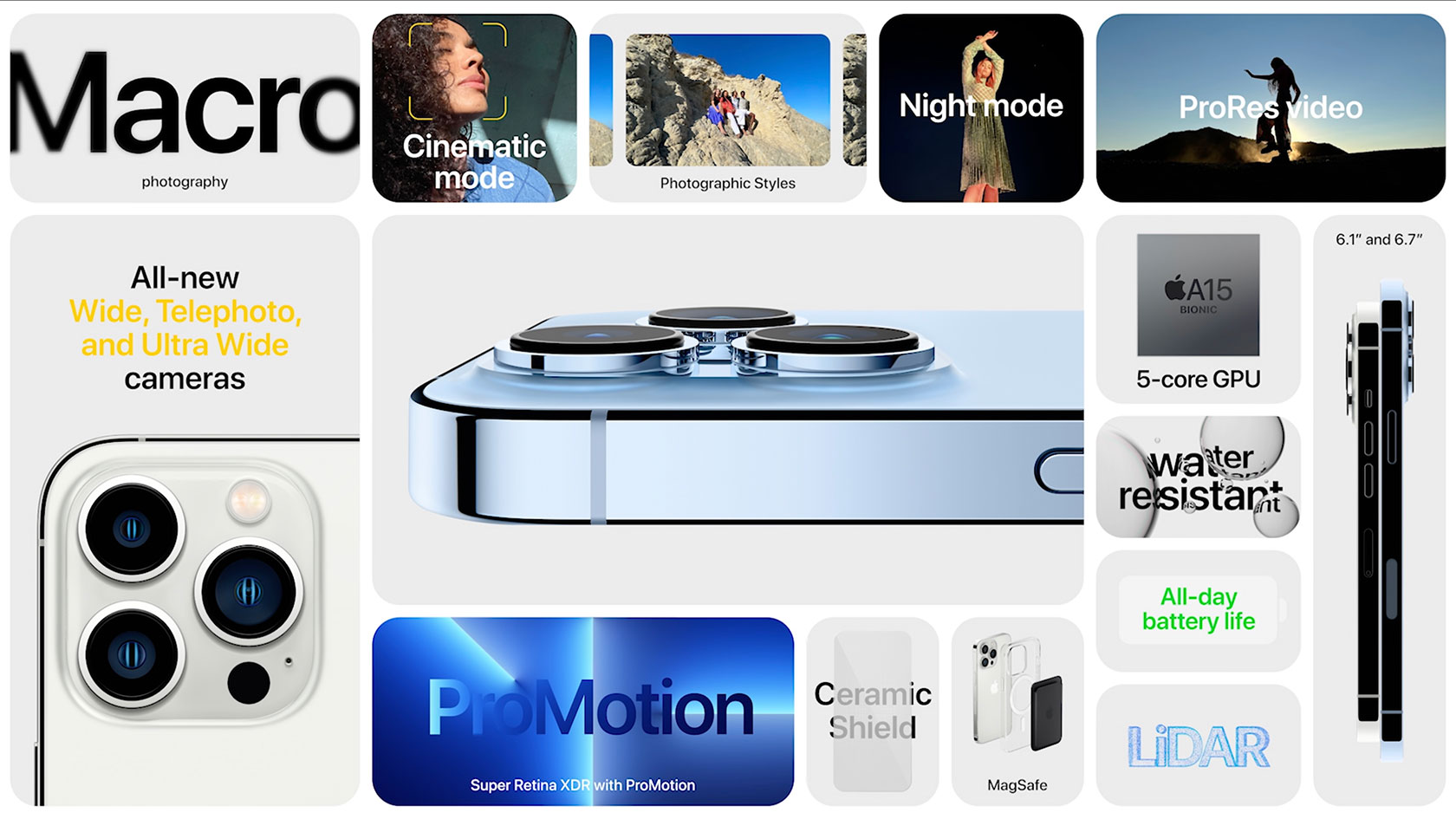
The iPhone 13 Pro and Pro Max feature 

Apple has announced its new lineup of phones at its virtual confernce. In addition to the regular iPhone 13 and iPhone 13 mini, the company has two Pro models with some premium features that you won’t find in the regular iPhone 13. 

Of course, the Pro models are also more expensive. For reference, the iPhone 13 Mini starts at $699 and the iPhone 13 starts at $799. As for the Pro models, the iPhone 13 Pro starts at $999 and the iPhone 13 Pro Max starts at $1,099. The iPhone 13 Pro has a 6.1-inch display while the iPhone 13 Pro Max has a 6.7-inch display.

“Our Pro lineup pushes the limits with our most advanced technologies for users who want the very best iPhone,” Apple CEO Tim Cook said.

Here’s what you’ll get if you decide to buy the iPhone 13 Pro instead of the iPhone 13. The design is slightly different, as the Pro models get shiny stainless steel bands around the case of the phone. There are also three stainless steel rings around the three camera sensors. The back of the device is made of matte glass.

There are three different camera sensors at the back of the iPhone 13 Pro and Pro Max instead of two. In addition to the ultra-wide and wide camera, you get a 3x camera. It seems like the wide and ultra wide cameras aren’t identical in the Pro models versus the regular models either.

Last year, only the iPhone 12 Pro Max featured sensor shift optical image stabilization. This time, the entire iPhone 13 lineup gets sensor shift optical image stabilization. Basically, the regular iPhone 13 is getting many of the advanced camera features that was restricted to Pro models.

In particular, there’s a new cinematic mode with rack focus. You can track a subject and lock focus on that subject in real time. Cinematic mode shoots in Dolby Vision HDR. Later this year, you’ll be able to shoot ProRes videos with the iPhone 13 Pro and Pro Max.

So here’s what you get in the iPhone 13 and 13 Pro Max:

  • A 77mm telephoto camera with 3x optical zoom.
  • An ultra-wide camera with ƒ/1.8 aperture and “up to 92% improvement in low-light performance,” according to Apple.
  • A wide camera with ƒ/1.5 aperture and “up to 2.2x improvement in low-light performance,” according to Apple.

For the first time, you can use Night mode with all three cameras. This way, you don’t have to remember which camera will give you the best result.

The iPhone 13 Pro and Pro Max come with a Pro Motion display with P3 color range. Like on high-end iPad models, these iPhone models have an adaptive framerate. If you need it, your iPhone display can run at 120Hz. If you’re watching a movie, the iPhone can use a lower framerate to save battery life.

As the iPhone 13 Max is the largest smartphone in the lineup, you get more battery life. Apple promises a battery that lasts 2.5 hours longer for the iPhone 13 Pro Max compared to the iPhone 12 Pro Max.

Like the iPhone 13 and 13 Mini, the Pro models come with Apple’s A15 Bionic chip. It’s a 5-mm design with 15 billion transistors. There are two high-performance cores and four energy-efficient cores. You should get nearly the same performances across the lineup, but there’s a new 5-core GPU in the Pro lineup.

Preorders start on Friday and they will be available on September 24. There are four models, with 128GB, 256GB, 512GB or 1TB of storage.

Anonymous Claims to Have Stolen Huge Trove of Data From Epik, the Right-Wing’s Favorite Web Host

Members of the hacktivist collective Anonymous claim to have hacked web registration company Epik, allegedly stealing “a decade’s worth of d...